In the modern workspace, where the line between activity and inertia often blurs, the standing desk has emerged as a powerful tool to combat sedentary habits. Yet, simply standing still for prolonged periods can lead to its own set of discomforts, from muscle fatigue to reduced circulation. What if you could transform static standing into a dynamic, health-boosting experience, all while maintaining focus on your work? The answer lies in the standing desk balance board – a simple yet profound accessory that engages your body, sharpens your mind, and revolutionizes how you work.
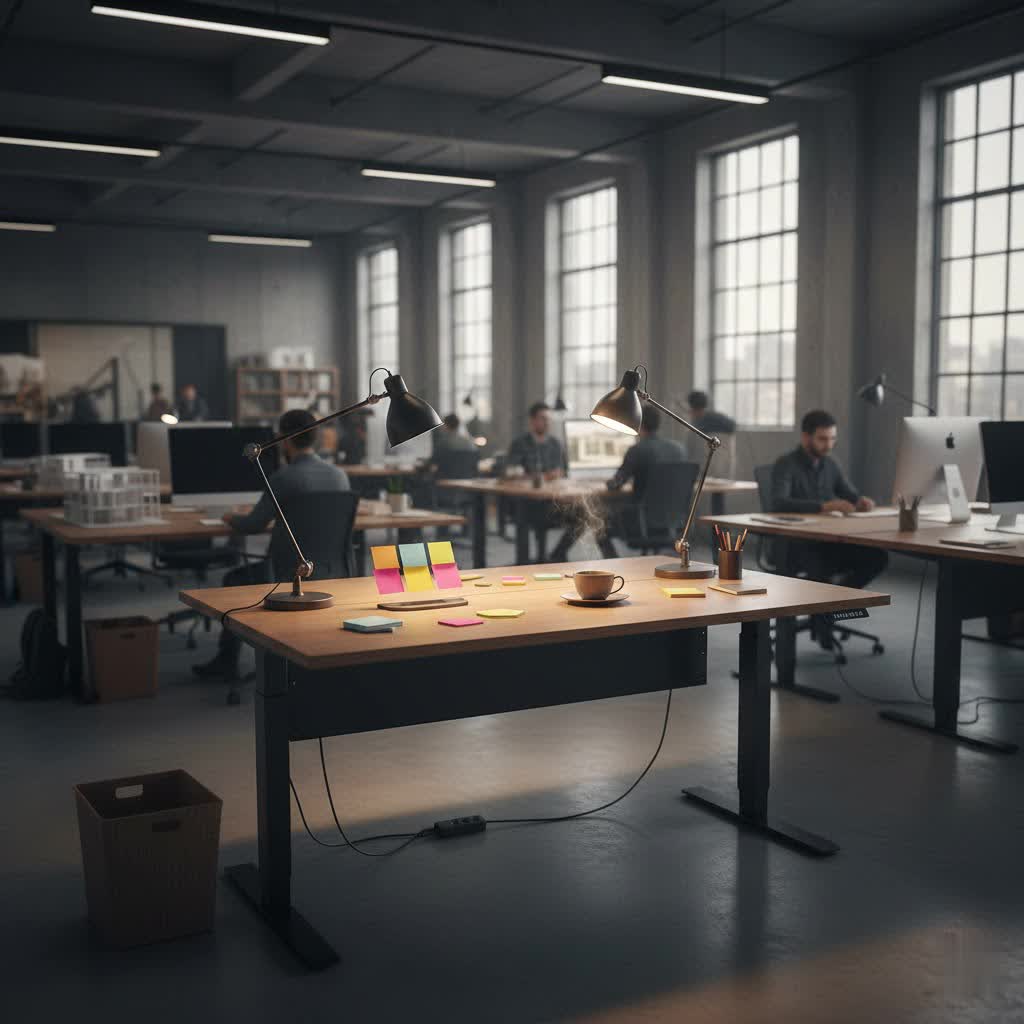
This comprehensive guide will delve into everything you need to know about integrating a balance board into your standing desk setup. We’ll explore the myriad health and productivity benefits, break down the different types available, provide an expert buying guide, and share essential tips for seamless integration into your daily routine. Prepare to unlock a more active, energized, and focused workday.
The Benefits of Using a Standing Desk Balance Board
Incorporating a balance board with your standing desk is far more than a fleeting trend; it’s a strategic upgrade that yields significant physical and mental advantages. It transforms passive standing into “active standing,” where continuous, subtle movements engage your body and mind without distraction.
Improved Posture and Core Strength
|
Our Picks for the Best Standing Desk in 2026
As an Amazon Associate I earn from qualifying purchases.
|
||
| Num | Product | Action |
|---|---|---|
| 1 | ErGear Height Adjustable Electric Standing Desk, 48 x 24 Inches Sit Stand up Desk, Memory Computer Home Office Desk with Two-Piece Desktop (White) |

|
| 2 | Veken 55 Inch Large Electric Standing Desk, 4 Memory Heights Adjustable,Sit to Stand Up, Work Home Office Computer Table for Study, Walking Pad, Writing, and Games, Wooden Desktop Desks, Nature Wood |
|
| 3 | ErGear Height Adjustable Electric Standing Desk, 48 x 24 Inches Sit Stand up Desk, Memory Computer Home Office Desk with Two-Piece Desktop (Vintage Brown) |
|
| 4 | ErGear Height Adjustable Electric Standing Desk, 48 x 24 Inches Sit Stand up Desk, Memory Computer Home Office Desk with Two-Piece Desktop (Grey) |
|
| 5 | ErGear Height Adjustable Electric Standing Desk, 48 x 24 Inches Sit Stand up Desk, Memory Computer Home Office Desk with Two-Piece Desktop (Walnut) |
|
| 6 | Veken 55 Inch Large Electric Standing Desk,Sit to Stand Up, Heights Adjustable, Work Home Office Computer Table for Study, Walking Pad, Writing, and Games, Wooden Desktop Desks, White |
|
| 7 | Veken 55 Inch Large Electric Standing Desk, Heights Adjustable, Sit to Stand Up, Work Home Office Computer Table for Study, Walking Pad, Writing, and Games, Wooden Desktop Desks, Brown |
|
| 8 | Veken 55 Inch Large Electric Standing Gaming Desk, Heights Adjustable,Sit to Stand Up, Work Home Office Computer Table for Study, Walking Pad, Writing, and Games, Wooden Desktop Desks, Black |
|
| 9 | HUANUO 32" Small Electric Standing Desk Adjustable Height, 4 Memory Height Settings, Sit Stand Up Desk for Home Office & Computer Workstation, LightWalnut |
|
| 10 | Ergear Height Adjustable Electric Standing Desk, 48x24 Inches Sit Stand up Memory Computer Home Office Desk (Natural),(EGESD5N) |
|
One of the most compelling benefits of a standing desk balance board is its ability to enhance your posture and strengthen your core. To maintain equilibrium on an unstable surface, your body naturally engages its deep core muscles – abdominals, obliques, and lower back – along with muscles in your legs and ankles. This constant, low-intensity engagement acts like a continuous workout for your stabilizing muscles. Over time, this leads to a stronger core, providing better support for your spine and encouraging a more neutral, aligned posture. This can significantly reduce the tendency to slouch and alleviate the strain that often causes back pain.
Reduced Fatigue and Increased Energy
Standing still for extended periods can be surprisingly fatiguing, leading to stiffness, discomfort, and decreased blood circulation in the lower limbs. A balance board actively counters this by encouraging constant micro-movements. These subtle shifts prevent muscles from stiffening and promote better blood flow throughout your body. The result is reduced fatigue, a feeling of increased energy, and a more invigorated work routine, making prolonged standing far more comfortable and sustainable.
Enhanced Focus and Productivity
The subtle challenge of maintaining balance on a board provides just enough stimulation to keep your brain alert without diverting focus from your tasks. This gentle stimulation boosts blood circulation, delivering more oxygen to your brain, which can lead to improved cognitive function and concentration. Many users report increased focus and reduced mental fatigue, finding that the balance board helps them stay engaged and productive, especially during long work sessions.
Better Joint Health and Circulation
Static standing can put undue pressure on your joints, particularly in your knees and ankles. The dynamic nature of a balance board encourages small, continuous movements that help decompress the spine and distribute pressure more evenly across your joints. This constant, gentle motion prevents your joints from locking up, supports cartilage health, and improves overall circulation, which is crucial for preventing discomfort and long-term musculoskeletal issues.
Increased Calorie Burn
While not a substitute for a full workout, using a balance board with your standing desk can subtly increase your daily calorie expenditure. Standing already burns more calories than sitting, but the added muscle engagement required to maintain balance on a board further elevates your metabolic rate. Studies have shown that this constant muscle activation can increase calorie burn by a measurable percentage compared to static standing, contributing to better overall health and weight management over time.
Types of Standing Desk Balance Boards
Choosing the right balance board for your standing desk depends largely on your comfort level, desired challenge, and work style. There are several primary types, each offering a distinct experience and range of motion.
Rocker Boards
Rocker boards are generally considered the most beginner-friendly option. They feature a flat platform on a fixed, semi-circular base that allows movement in a single direction—either side-to-side or front-to-back.
- Pros: Highly stable, predictable motion, easy to learn, ideal for subtle engagement without significant distraction.
- Best for: Beginners, individuals seeking gentle movement, or those prioritizing focus during detailed work.
Wobble Boards
Wobble boards, also known as stability boards, offer a greater challenge and more dynamic movement than rocker boards. They typically have a circular or square platform on a dome-shaped or spherical base, allowing for 360-degree tilt and rotation.
- Pros: Engages more muscle groups, offers a wider range of motion, provides a more intensive balance challenge.
- Best for: Users looking for moderate engagement, those with some balance experience, or individuals wanting to integrate more active movement.
Roller Boards
Roller boards consist of a flat deck placed on a separate cylindrical roller. These boards provide the most dynamic and challenging experience, often mimicking board sports like surfing or snowboarding.
- Pros: Excellent for advanced balance training, significantly improves coordination and proprioception.
- Best for: Experienced users, athletes, or those who want to actively train balance during breaks, rather than continuous desk work due to their higher instability.
Ergonomic Boards (Specific Designs for Desk Use)
Many manufacturers offer balance boards specifically designed for office environments, often combining features from rocker and wobble boards with ergonomic considerations. These may include cushioned, anti-fatigue surfaces, lower profiles, and a controlled tilt range to ensure comfort and stability for all-day use.
- Pros: Designed for prolonged comfort, often feature anti-slip and anti-fatigue properties, moderate challenge suitable for office tasks.
- Best for: Anyone seeking an optimal blend of comfort, gentle movement, and productivity enhancement in a standing desk setup.
Factors to Consider When Choosing a Standing Desk Balance Board
Selecting the ideal balance board requires careful consideration of your personal needs, workspace, and desired level of engagement. Making an informed choice ensures you reap the full benefits without compromising comfort or safety.
Your Experience Level and Stability Needs
Consider your current balance and physical condition. If you are new to active standing or have any balance concerns, start with a board that offers more stability. Rocker boards or ergonomic boards with a gentle tilt range are excellent entry points, allowing you to gradually adapt to the subtle movements. More experienced users might prefer wobble boards for a greater challenge and multi-directional movement.
Board Type and Movement Range
As discussed, different board types offer varying degrees of movement and challenge. Rocker boards provide controlled, single-plane motion, while wobble boards allow 360-degree movement. Evaluate whether you prefer subtle engagement to maintain focus or a more dynamic experience to actively strengthen your balance and core. Some boards may also offer adjustable tilt degrees, allowing you to customize the challenge.
Size, Weight Capacity, and Desk Compatibility
Measure your workspace carefully. Ensure the board’s footprint is appropriate for the space under your standing desk and that there’s enough room for movement without obstruction. Consider your height; taller individuals may find larger decks more comfortable for a wider stance. Always check the manufacturer’s specified weight capacity to ensure the board can safely support you. Also, verify compatibility with your floor type, as some bases may perform differently on carpet versus hard surfaces.
Material, Durability, and Surface Grip
Balance boards are typically made from wood, plastic, or composite materials. Wood offers classic aesthetics and durability, while plastic options tend to be lighter. Look for boards with a non-slip or textured surface (e.g., rubberized, grooved, or cork-lined) to prevent accidental slips, whether you’re wearing shoes or going barefoot. A cushioned surface can also provide added comfort for prolonged use.
Additional Features and Budget
Some balance boards come with extra features such as integrated anti-fatigue mat properties, portability handles, or ergonomic contours designed to support natural foot positioning. While higher-end models often offer superior build quality and specialized features, there are also budget-friendly options that provide core benefits. Determine which features are essential for your needs and set a budget accordingly. Remember, the goal is to find a board that complements your standing desk and enhances your well-being without causing unnecessary strain or distraction.
Popular Standing Desk Balance Boards: A Comparison
Choosing from the variety of standing desk balance boards can be daunting. While specific models and prices fluctuate, understanding the general characteristics of popular designs can help you make an informed decision. Here’s a conceptual comparison focusing on common types and features you’ll encounter.
| Type of Board | Key Movement | Ideal User | General Pros | General Cons |
|---|---|---|---|---|
| Rocker Board | Side-to-side or front-to-back tilt | Beginners, focus-intensive tasks | High stability, intuitive to use, low distraction | Limited range of motion, less muscle engagement |
| Wobble Board | 360-degree tilt and rotation | Intermediate users, active engagement | Engages more muscles, versatile for micro-movements | Can be distracting for precision tasks, steeper learning curve |
| Ergonomic/Fluid Board | Gentle, controlled multi-directional sway | All-day users, comfort-focused | Designed for prolonged comfort, often anti-fatigue | Can be pricier, less intense for athletic training |
| Anti-Fatigue Balance Board Hybrid | Gentle rocking with cushioned surface | Users seeking comfort & subtle movement | Combines comfort of mat with benefits of movement | May offer less dynamic movement than pure balance boards |
Please note: This table provides a generalized comparison. Specific brand models within each category will have their own unique features, build quality, and price points.
Integrating a Balance Board into Your Ergonomic Workspace
Successfully incorporating a balance board into your daily routine involves more than just placing it under your feet. Proper setup and mindful usage are key to maximizing benefits and ensuring safety and comfort.
Proper Setup and Desk Height Adjustment
When you stand on a balance board, you will be elevated by a few inches. It’s crucial to adjust your standing desk height accordingly. Your elbows should remain at a comfortable 90-degree angle when typing, with your wrists straight and neutral. Similarly, your monitor should be at eye level to prevent neck and shoulder strain. You might need an adjustable monitor arm or stand to achieve the correct ergonomic height after adjusting your desk for the board.
Maintaining Correct Posture
Good balance board ergonomics begin with maintaining proper alignment. Keep your hips, neck, and torso in a vertical line, and avoid slouching. Allow your body to make natural, subconscious micro-adjustments to stay upright rather than actively forcing large movements. This subtle engagement is enough to activate muscles, improve circulation, and support good posture without causing excessive fatigue or distraction.
Tips for Effective Use
To get the most out of your balance board, start slow. Begin with short intervals, such as 15-20 minutes at a time, and gradually increase usage as your body adapts. It’s beneficial to alternate between standing on the board, static standing on a flat surface (or an anti-fatigue mat), and seated work. This varied approach prevents muscle fatigue and keeps your body engaged. Ensure your workspace is clear of clutter, cords, or tripping hazards, and use the board on a flat, solid surface. Wearing flat, supportive shoes can also enhance stability and comfort.
Who Should (and Shouldn’t) Use a Balance Board
Most individuals can safely and beneficially use a balance board for standing desk routines. They are an excellent tool for office professionals, remote workers, and anyone looking to enhance health and productivity while standing.
> “Balance boards are a powerful tool that transforms passive standing into an active, health-boosting activity, effectively combating the negative effects of a sedentary workday by increasing calorie burn, strengthening your core, improving posture, and fighting fatigue.” – DeskBreak Ergonomics Expert Team
However, balance boards are not recommended for everyone. Individuals with pre-existing balance disorders, recent ankle or knee injuries, or certain medical conditions should consult a healthcare provider before use. They are also generally not advised for tasks requiring extreme precision or fine motor skills, as the inherent instability might be distracting. Most ergonomic experts suggest becoming comfortable with standing for at least two hours daily on a flat surface before progressing to a balance board.
Conclusion
The standing desk balance board is more than just an accessory; it’s an investment in your long-term health, focus, and overall well-being. By transforming static standing into a dynamic, active experience, these boards help you combat the detrimental effects of prolonged immobility, whether you’re seated or standing still. From strengthening your core and improving posture to boosting energy and sharpening focus, the benefits are undeniable.
Choosing the right balance board involves understanding the different types—rocker, wobble, or ergonomic—and considering factors like your experience level, workspace, and material preferences. With proper setup and mindful use, a balance board can seamlessly integrate into your routine, making your standing desk an even more powerful tool for a healthier, more productive workday.
Ready to add dynamic movement to your standing routine and feel the difference? Which type of balance board will you choose to energize your workspace?
Frequently Asked Questions
What are the main benefits of using a balance board with a standing desk?
Using a balance board with a standing desk significantly improves posture, strengthens core muscles, reduces physical fatigue, and enhances mental focus. It also promotes better blood circulation and can increase calorie expenditure through constant micro-movements, turning static standing into an active, health-boosting activity.
How do I choose the right balance board for my standing desk?
Consider your experience level (beginners often prefer rocker boards for stability), the type of movement you desire (rocker for single-plane, wobble for 360-degree), your desk’s height clearance, and the board’s size and weight capacity. Look for non-slip surfaces and durable materials to ensure safety and longevity.
Can a balance board help with back pain while standing?
Yes, a balance board can help reduce back pain by encouraging continuous micro-movements that engage core and postural muscles, supporting better spinal alignment. This dynamic engagement prevents stiffness and distributes pressure more evenly, alleviating the strain often associated with prolonged static standing.
How long should I use a balance board at my standing desk each day?
It’s recommended to start with short intervals, such as 15-20 minutes at a time, and gradually increase usage as your body adapts. Alternating between the balance board, static standing, and sitting throughout the day is a healthy approach to prevent fatigue and maintain comfort.
Are balance boards suitable for everyone?
While beneficial for most, balance boards are not recommended for individuals with pre-existing balance disorders, recent injuries, or certain medical conditions without professional consultation. They may also be distracting for tasks requiring extreme precision, so it’s advisable to assess your comfort and work requirements.
What’s the difference between a rocker board and a wobble board?
A rocker board offers movement in a single direction (side-to-side or front-to-back) and is more stable, making it ideal for beginners. A wobble board provides 360-degree movement due to its spherical base, offering a greater challenge and engaging more muscle groups, suitable for intermediate users.
